Mission Mondays: We Are Blessed To Be A Blessing
by Lorenzo Windrow, Associate Director of Development for the National Museum of African American Music
The Boardroom in the National Museum of African American Music is a space that has held artists, executives, civic leaders, and donors at different moments, for very different reasons.
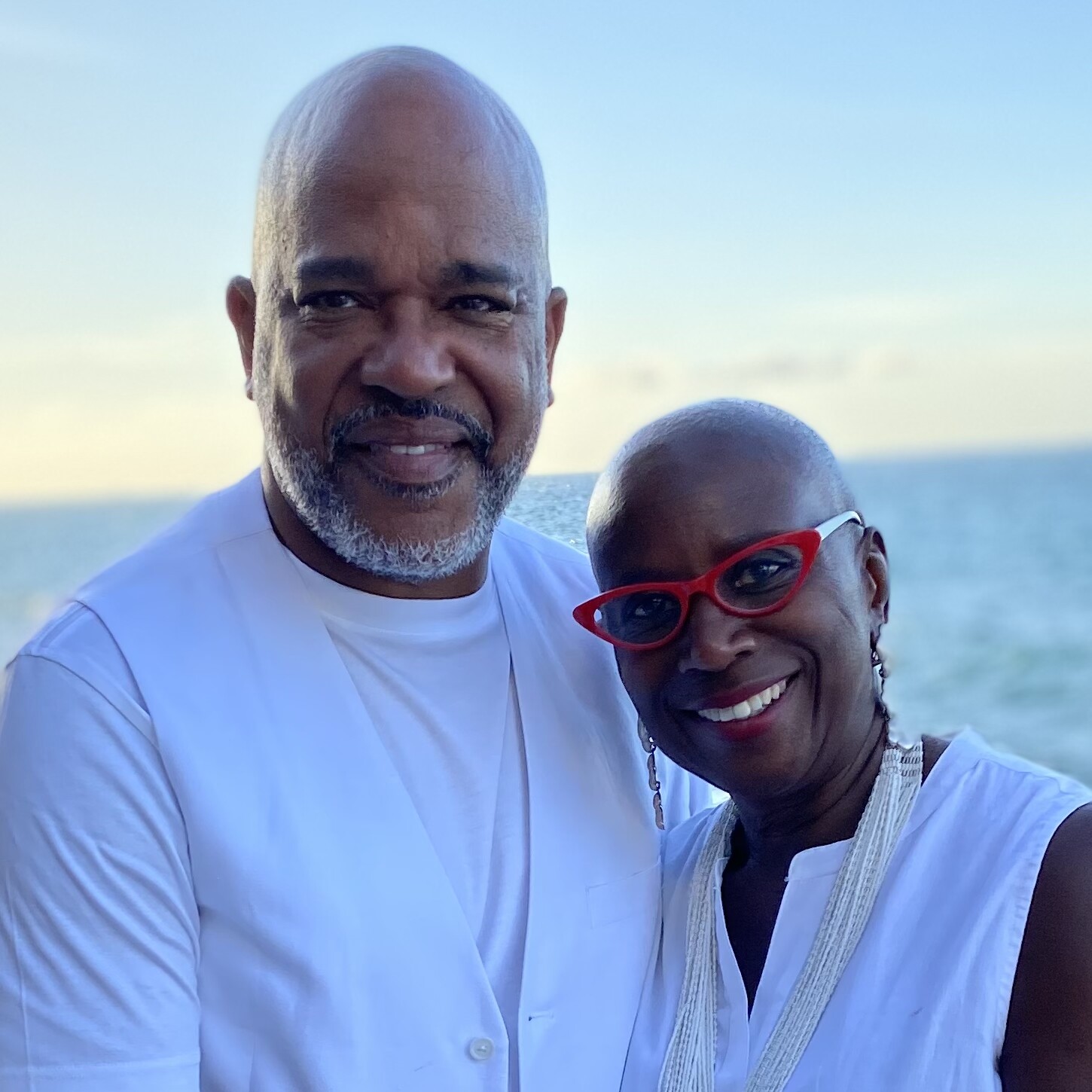
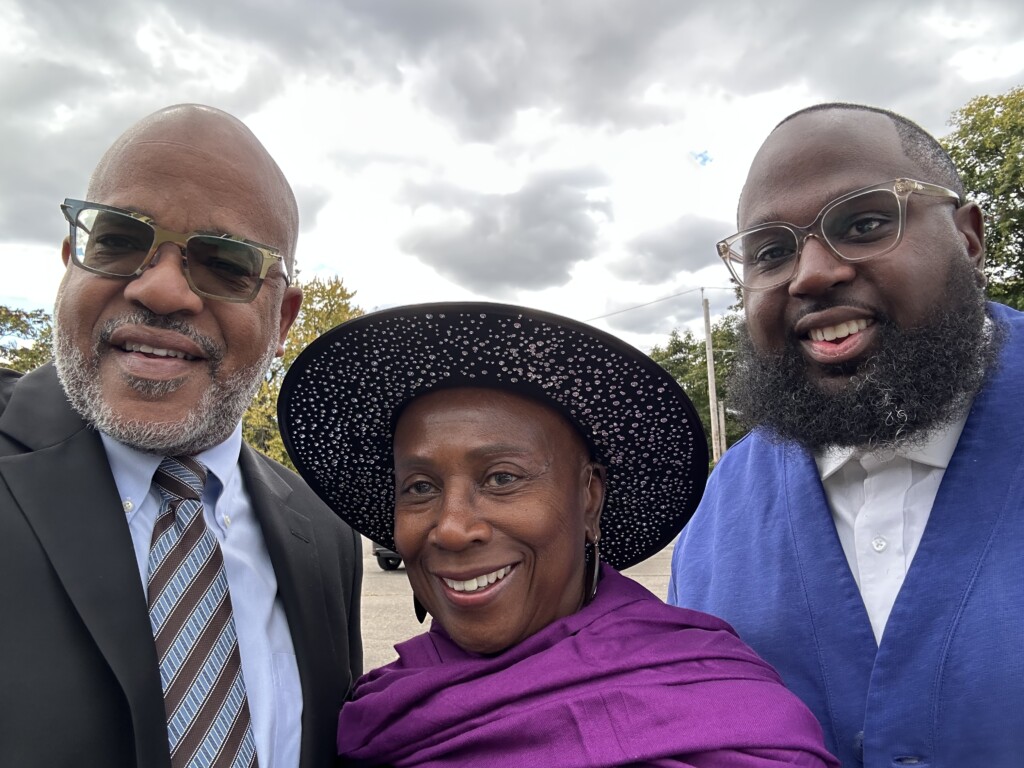
Reverend Gary Henderson and Mrs. Gwendolyn Henderson settled in without the posture of people being interviewed. They certainly didn’t perform for the room’s inherent expectation. What followed moved the way real life does. One idea folding into another, music into memory, memory into faith, and faith into giving, without needing to separate them into clean categories.
When I asked how music had shown up in their lives, Gwendolyn answered first– not with a favorite artist or a defining moment, but with a setting. A small church outside Dublin, Georgia, where instruments weren’t guaranteed and structure came from the people in the room.
“Somebody would line the hymn,” she said, describing the practice of calling out each phrase before the congregation sang it back, It wasn’t framed as something remarkable at the time, but as I write this now, it reads as something much more deliberate: a way of preserving sound and story when there wasn’t another system to hold it.
Gary, listening beside her, entered from a different direction, but arrived at a similar place. “For me, music has always been that place where I find the inner me,” he said, adding that it has shaped how he understands the world, even theologically.
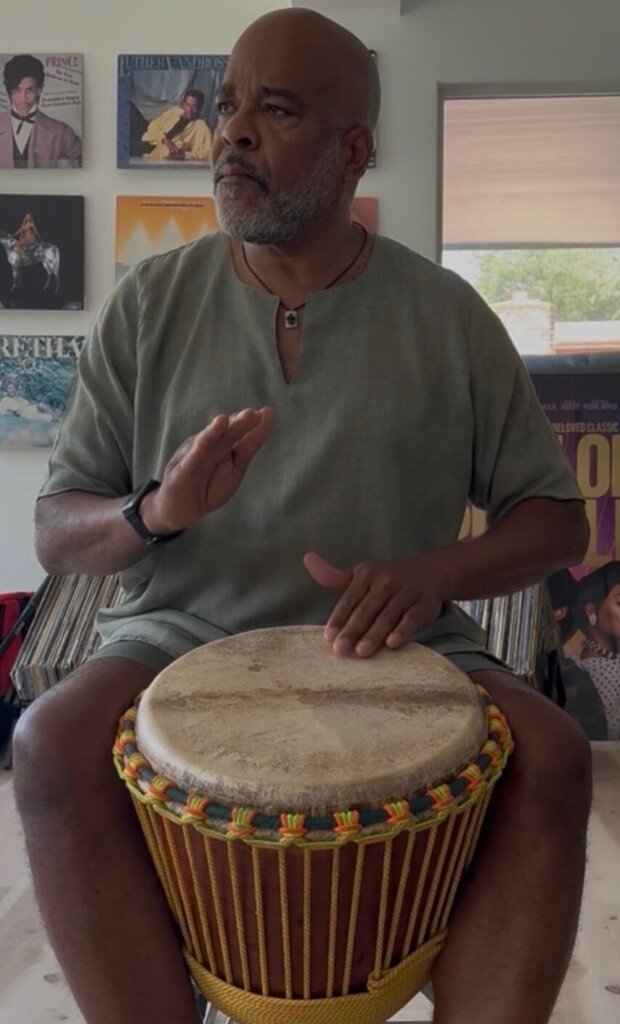
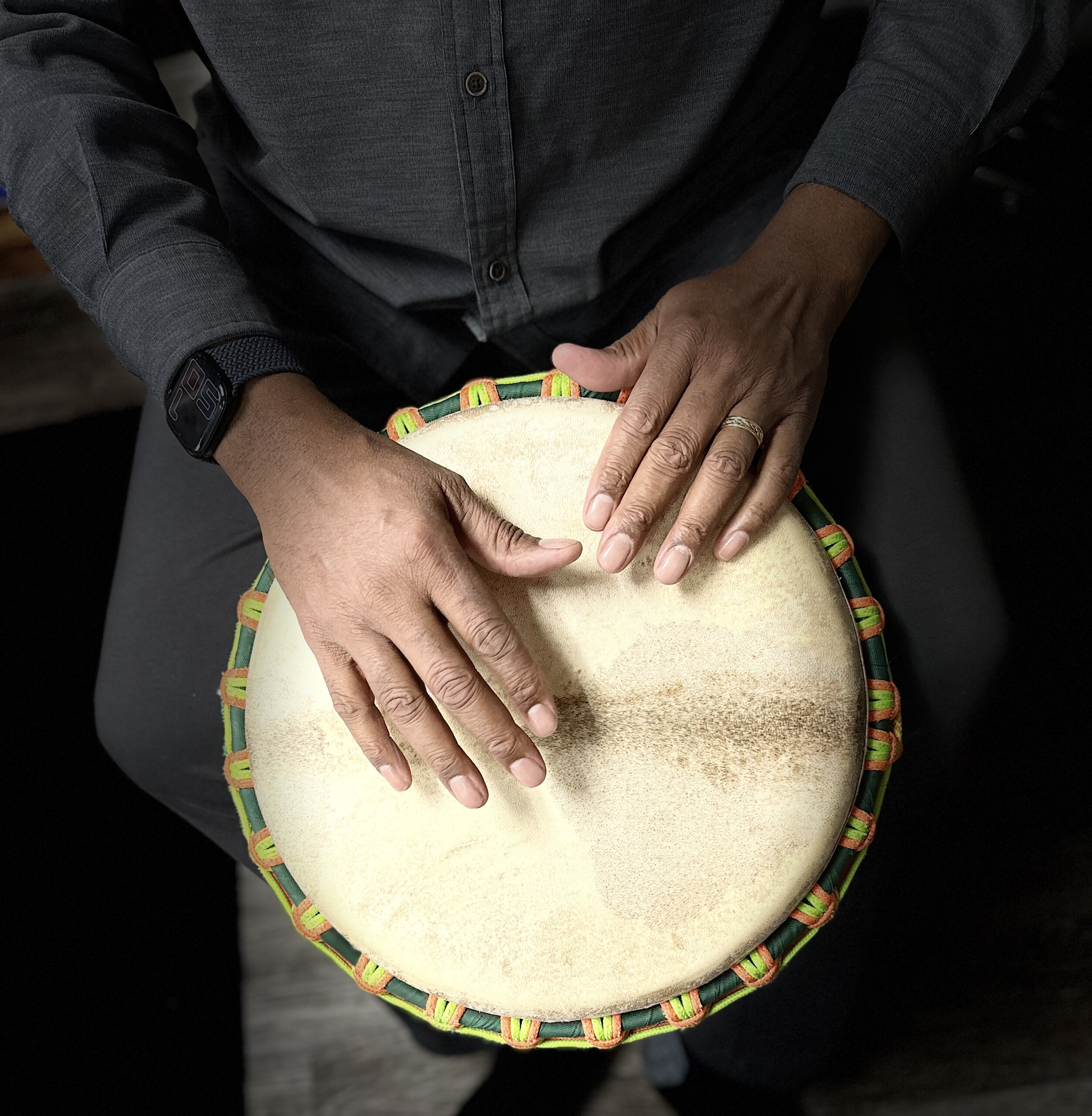
More recently, that connection has taken on a different form. Gary mentioned in passing that he’s been learning the djembe (a West African drum), something he picked up after retiring, deciding he wanted to “go deeper with the music.” He had just finished a lesson before walking into the room. He laughed about it saying he’s “not a musician,” even as he described taking private lessons and staying with it for over a year. In the same breath, he mentioned bringing his son in to help, watching him pick it up instantly, then shrugging it off with, “he’s got a degree in music.”
I asked, “Is there a song or moment that still feels like it belongs to you?”
Gary smiled at that one, already halfway in the answer. There was a song he used to play early in their relationship — “With You,” by The Moments — something Gwendolyn remembers receiving with a bit of skepticism.
“I thought it was corny,” she admitted, not correcting him so much as completing the memory. Years later, on a trip with friends, the same song surfaced again. This time it landed differently. Gary didn’t over-explain it.
“It had new meaning,” he said, and she nodded in a way that suggested the distance between those two moments had already done the work.
There are other stretches of life that change how music functions. Gwendolyn spoke about a period between 2015 and 2021 when she lost five siblings. Three brothers and two sisters.
“There was a song…” she said, referring to something she returned to repeatedly during that trying time “…it held me.” Music has a way of coming alongside us and supporting us through grief the way nothing else can. The song was called “He Made a Way.”
I asked if the couple remembered when NMAAM first came onto their radar.
Gary recalled seeing a sign years ago, before the building existed, marking what would eventually become reality. Gwendolyn couldn’t recall a singular moment. In their case, awareness wasn’t the turning point. The movement from knowing to engaging came later, and it didn’t come through a campaign or formal introduction. It came through people.
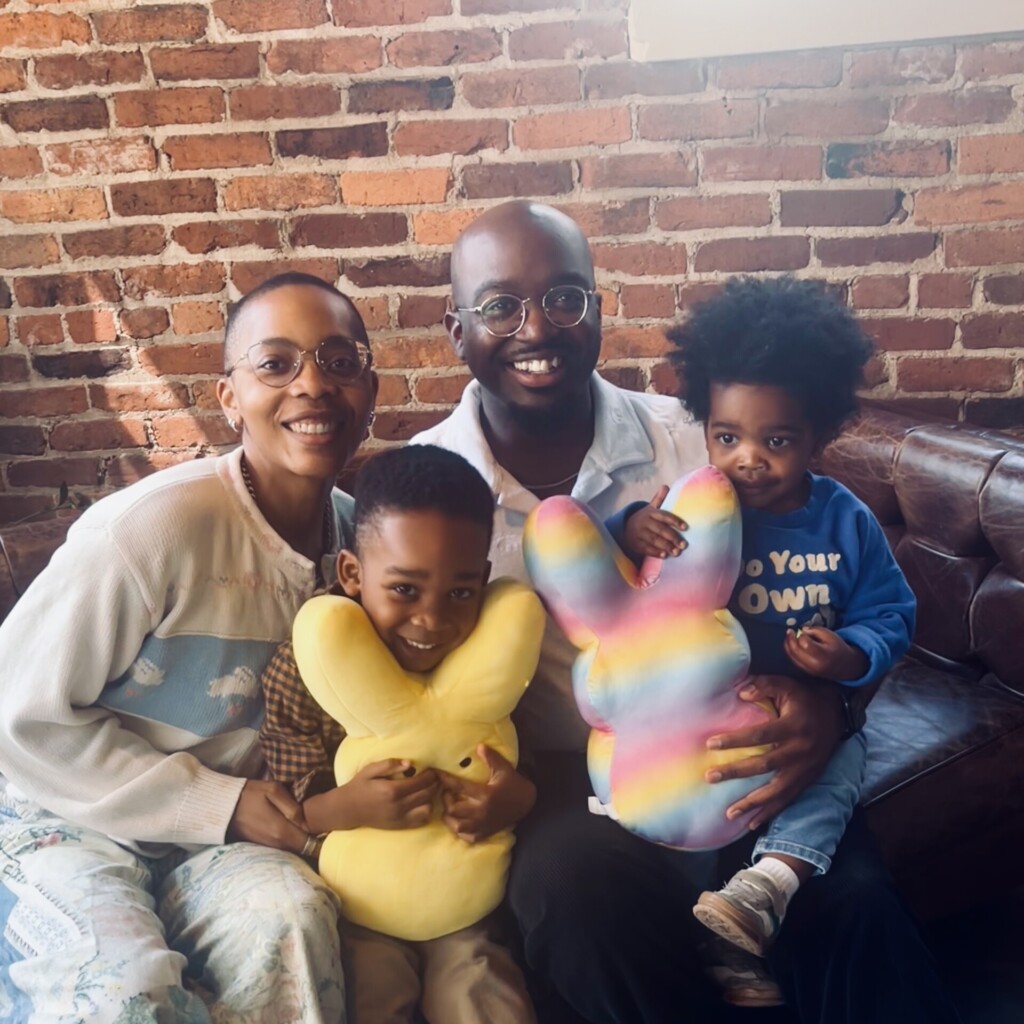
They met NMAAM’s Dexter Evans at a gathering. At the time, Evans was new to Nashville and the Hendersons invited him and his wife over for Easter.
“We knew what that felt like,” Gwendolyn sympathized, recalling the experience of arriving somewhere without an immediate sense of community.
“We tend to believe if it’s ours, we invest in it,” Gary said, when explaining their choice to become museum donors. It didn’t sound like a decision made in isolation.
Gwendolyn expanded the idea in a way that sharpened it: “We give where people can be educated about who they are.” The emphasis wasn’t on programming or even preservation in the abstract. It was on identity, and the spaces that allow it to be understood and carried forward.
That thinking becomes even clearer when they talk about giving itself. Gary described a question they ask whenever money comes into their lives, whether through work, bonus, or any other stream: “Is this for us, or is this for somebody else?”
It’s a simple framing, but one that changes the role of ownership entirely. Gwendolyn nodded as he said it. This is something they’ve practiced over time. What they’ve noticed is that living this way hasn’t resulted in lack.
“We’ve never gone without,” Gary reassured.
Gwendolyn followed with the phrase that seems to sit underneath all of it: “We’re blessed to be a blessing.”
In their case, it functions less as a saying and more as structure.
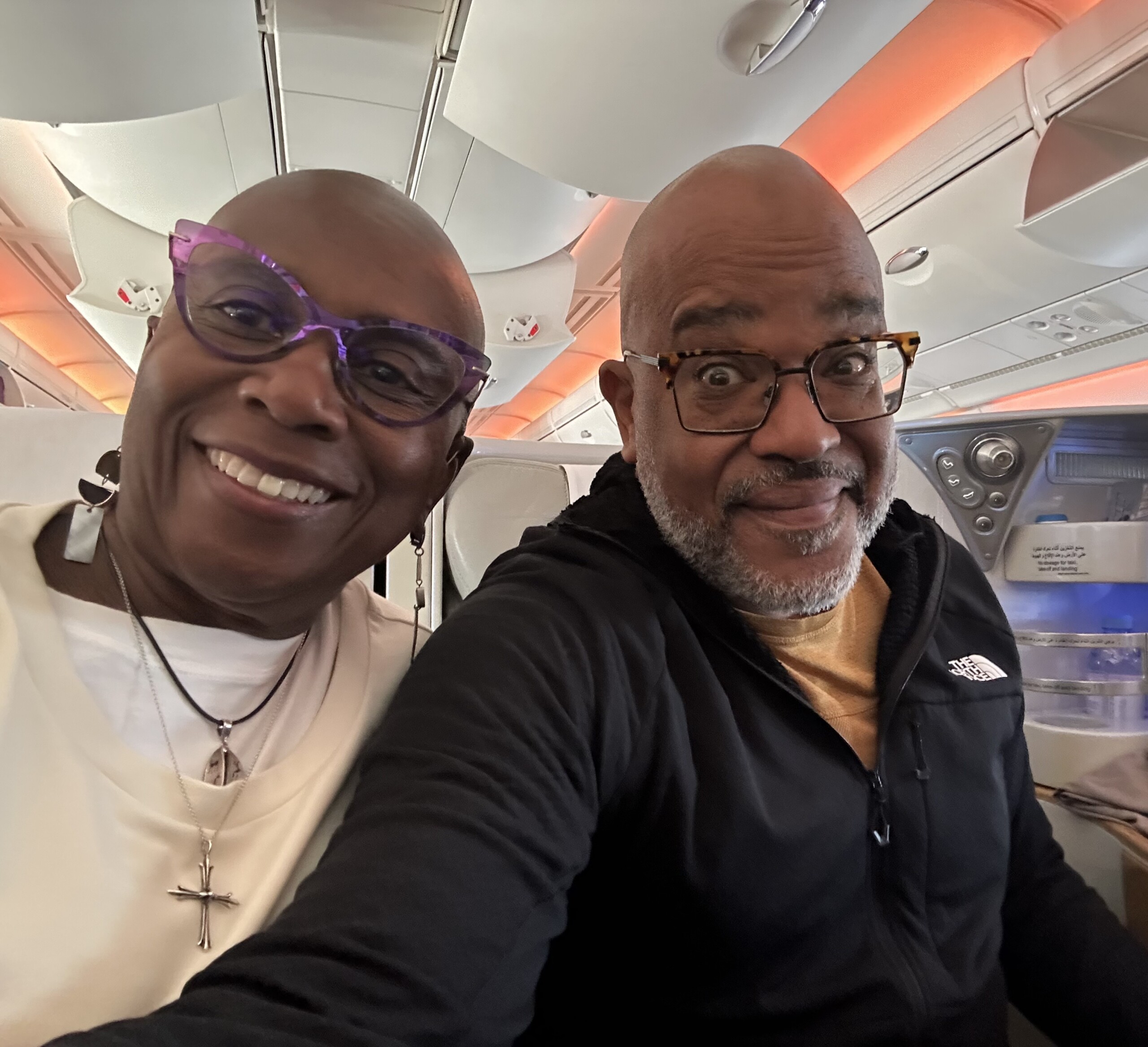
Gwendolyn shared that she believes in the work of NMAAM, which preserves the things that don’t get formally recorded. The traditions that live in people rather than systems. The way hymns were carried in spaces where reading music wasn’t an option.
“If we don’t preserve that, who will?” she pondered, returning again to responsibility. Gary added that when he listens closely, he can hear more than music; he can hear those who came before. It wasn’t offered as metaphor. It was simply how he experiences it.
By the time the conversation turned to what it means for them personally to support the museum, the answer was already embedded in everything they had said. Gwendolyn described a sense of pride, though she paused slightly before settling on the word, careful not to overstate it. It’s not about recognition. It was about knowing a place like this exists, here, and that they have some part in keeping it open.
Gary followed with a more direct articulation: “If I believe in it, I’ve got to put my money in it too.”
As our conversation wound down, I asked, “If someone is reading this, feels connected, but hasn’t taken that step to support yet, what would you say?”
Gary answered in a way that echoed everything that came before: “Knowledge is just knowledge if you don’t act on it.”
Gwendolyn reframed it again, not as instruction, but as perspective.
“These aren’t just gifts,” she said, “They’re legacy. We live on,” she added, “because we gave.”
In a room built for decisions, the Hendersons revealed a standard. When will you do what they’ve already decided to do: turn belief into something that lasts? Not someday, not when it’s convenient, but while it’s still yours to give. The music carries forward either way. The only difference is whether your name is part of what helped it continue.
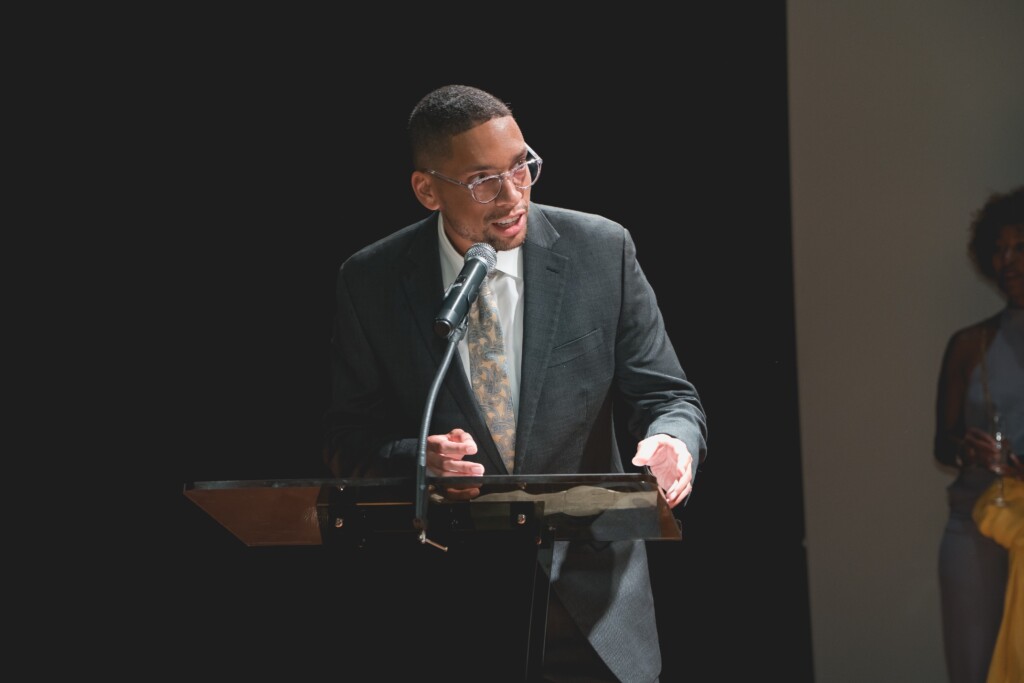
Lorenzo Windrow serves as Associate Director of Development at the National Museum of African American Music, where he manages an $8 million contributed income pipeline and leads transformative campaigns that sustain the museum’s mission of celebrating black music and culture. Read his bio here.
Mission Mondays is an initiative by The National Museum of African American Music to highlight the stories of the major donors who help make our mission possible. Want to be featured? Please contact marketing@nmaam.org. Inspired to support?