Mission Mondays: The Man Behind NMAAM’s Interactive Choir Exhibit
by Lorenzo Windrow, Associate Director of Development for the National Museum of African American Music
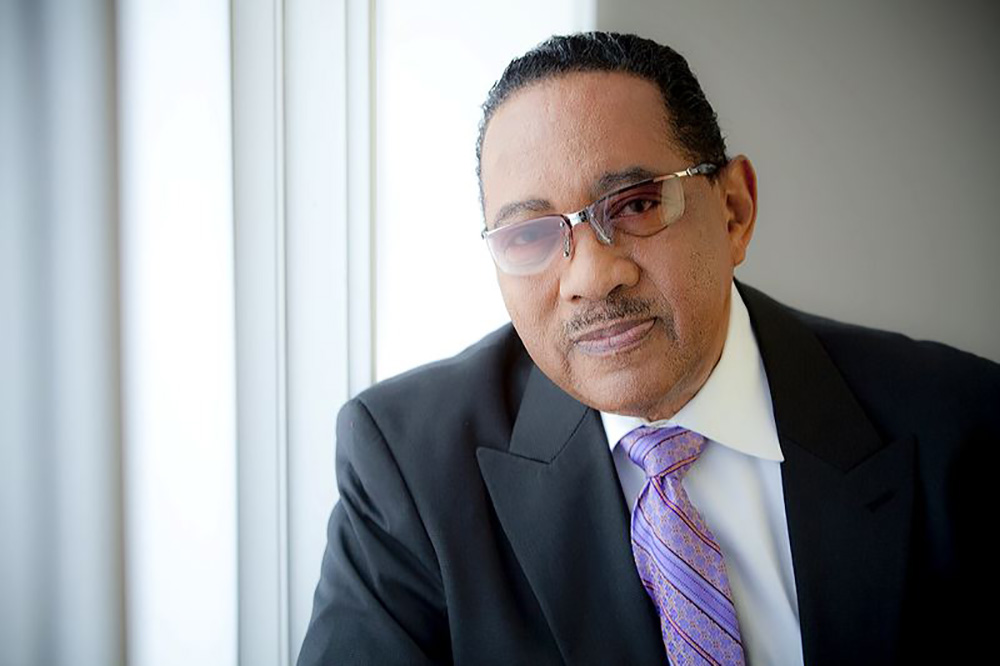
Dr. Bobby Jones lives the way certain American originals do: surrounded by proof, but not especially concerned with it.
He greeted me at his door with a wide smile, the kind that settles the room before you’ve even stepped fully inside. His home carries the weight of a life well lived, though nothing about it feels staged. Awards catch light from different angles, photographs hold entire decades in place, and plaques, frames, and mementos sit exactly where they’ve earned the right to be. On the grand piano, a Grammy rests casually as a paperweight. It doesn’t dominate the space. It’s normal.
Then there are the details that shift your understanding.
Maya Angelou’s shoes.
Not framed. Not elevated. Not positioned as something to admire. Just there, as if they had been left mid-conversation. I wrote in my notes: this is someone who lived history, shared space with it, and remained close enough to it for it to feel ordinary.
In his house, you don’t feel like a visitor.
You feel like you’ve stepped into something that never quite stopped moving.
And yet none of that is what stays with you the most.
It’s him.
Dr. Jones carries himself with a kind of ease that doesn’t match the scale of what he’s done. He’s quick, amused, and warm in a way that feels natural. He laughs often, and when he does, it sounds familiar, like it’s been with him his whole life. He remembers details without effort, and more than anything, he remains curious. The world still seems to interest him—which, considering everything he’s seen and done, may be the most revealing thing of all.
We both appreciate French culture, and from time to time, when our conversations come to a close, we’ll say the same thing.
“Au revoir.“
Not goodbye. Until we see each other again. Just the understanding that there will be another conversation.
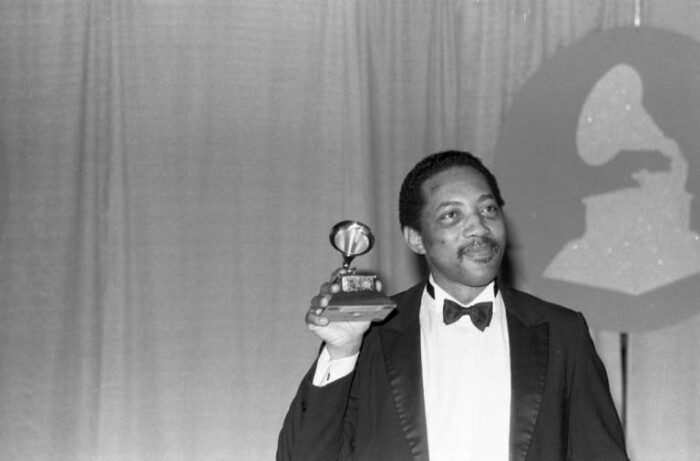
Bobby Jones poses with his GRAMMY award, 1984. (photo by Guy Crowder, Los Angeles Times)
When Dr. Jones was coming up, gospel music was not universally embraced in the places many would now assume it would have been. In some churches, it was considered too expressive, too far outside what was deemed appropriate. In academic spaces, it wasn’t always treated as central to the study of music. Even at Tennessee State, where he arrived in the mid-1970s, it did not fully exist within the framework that defined musical legitimacy at the time.
That part rarely gets told.
What changed him wasn’t acceptance, it was exposure. A Baptist church, a piano he wasn’t entirely sure he could play, and a room that refused to stay quiet.
In that church, the music moved through people, pulled them in, required something from them. At its root, Black music was never meant to be observed from a distance—it was meant to be entered, experienced, to be felt collectively.
Once you see what music can do to people in that way, you don’t approach it the same way again.
Dr. Jones didn’t.
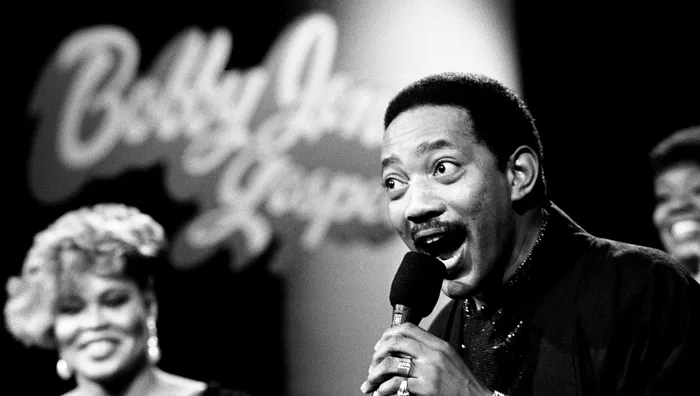
Bobby Jones performs during a taping of the “Bobby Jones Gospel” show, 1986. (photo by Kathleen Smith for The Tennessean)
What followed was a shift in how gospel music was experienced and understood at scale.
In 1980, he launched Bobby Jones Gospel on BET, a program that would run for 35 years and become the longest-running gospel television show in history. At that time, television wasn’t just exposure—it was access, it was reach, it was memory.
Week after week, year after year, he placed gospel music in front of people who may have never encountered it otherwise. Not once. Consistently. That kind of work doesn’t just elevate culture, it preserves it.
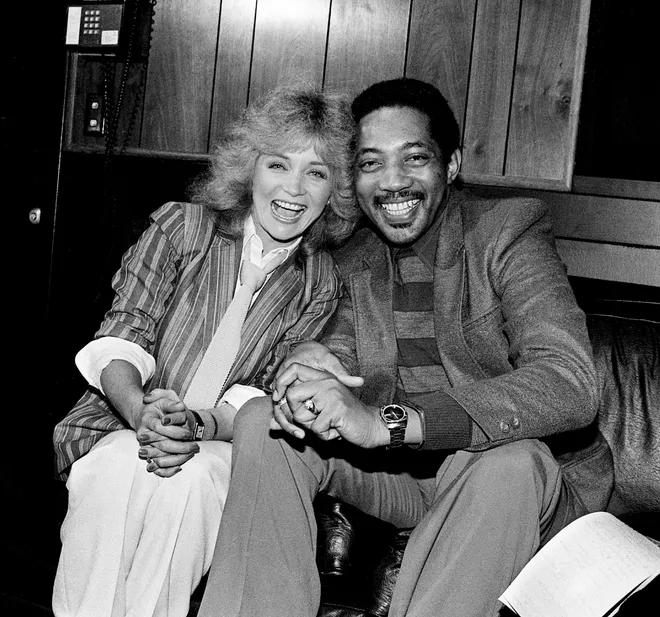
Bobby Jones with Barbara Mandrell in Nashville, 1983 (photo by Dale Ernsberger for The Tennessean)
He tells a story about performing with Barbara Mandrell, stepping into country audiences and national stages where gospel, particularly Black gospel, wasn’t expected. There’s a moment you can almost picture—a room settling into its assumptions, ready for something familiar… And then something unfamiliar arrives. The reaction, as he tells it, wasn’t gradual. It was immediate.
“There’s a kind of recognition that happens when something real enters a room… people may not have the words for it right away, but they know what they’re feeling.” He saw that happen more than once. Which is another way of saying—truth travels.
Spend enough time with Dr. Jones, and the conversation eventually shifts forward from the past. He doesn’t dwell on what’s been accomplished. He speaks more about what remains.
At one point, he said, simply: “If it isn’t preserved… it disappears.” He’s seen what happens when people assume something will always be there.
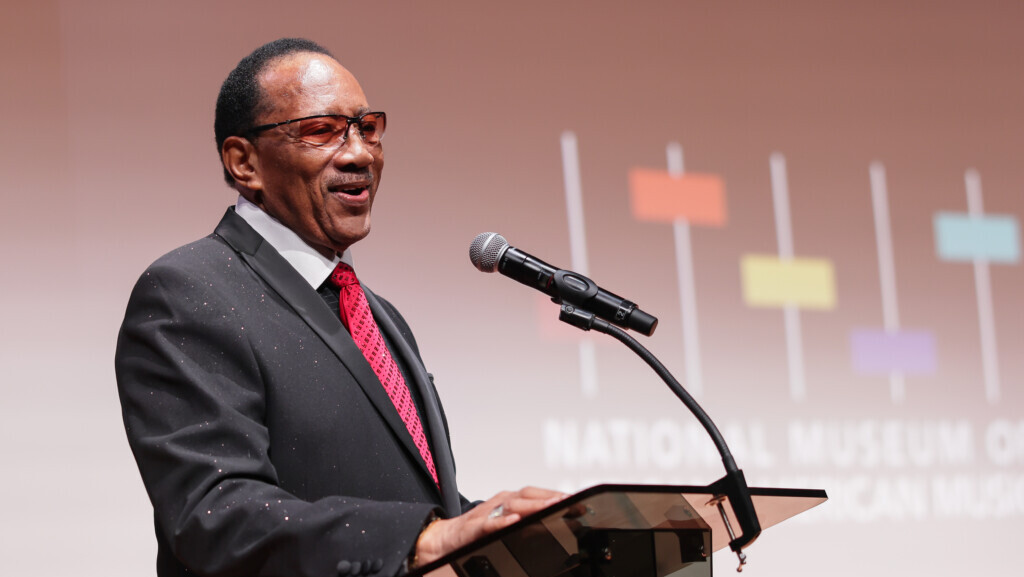
Dr. Bobby Jones speaking at the unveiling of his NMAAM exhibition, 2023 (photo by 353 Media, for NMAAM)
Not long ago, I had the chance to welcome him to a sold-out Jon Batiste performance at the National Museum of African American Music. At one point during the show, Jon stopped, looked into the audience, and said, “that’s Dr. Bobby Jones,” before both stood in recognition.
No setup. No explanation.
Moments like that move on recognition alone.
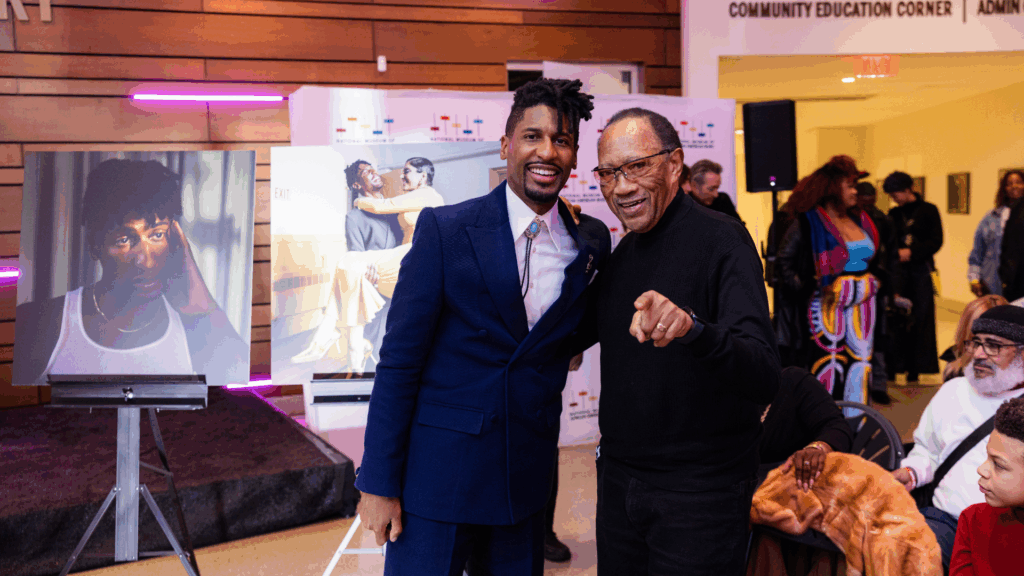
Dr. Bobby Jones with Jon Batiste at Batiste’s “Front Row” appearance at NMAAM, 2025 (photo by 353 Media, for NMAAM).
Dr. Bobby Jones was born in Henry, Tennessee—a place small enough that you could pass through it without noticing if you weren’t paying attention.
From there, he built a life that moved across classrooms, stages, studios, and continents, carrying with it a sound that once struggled for space, and helping to position it where it could no longer be overlooked.
The recognition followed, as it tends to when the work holds up. What’s more noticeable is how lightly he carries it.
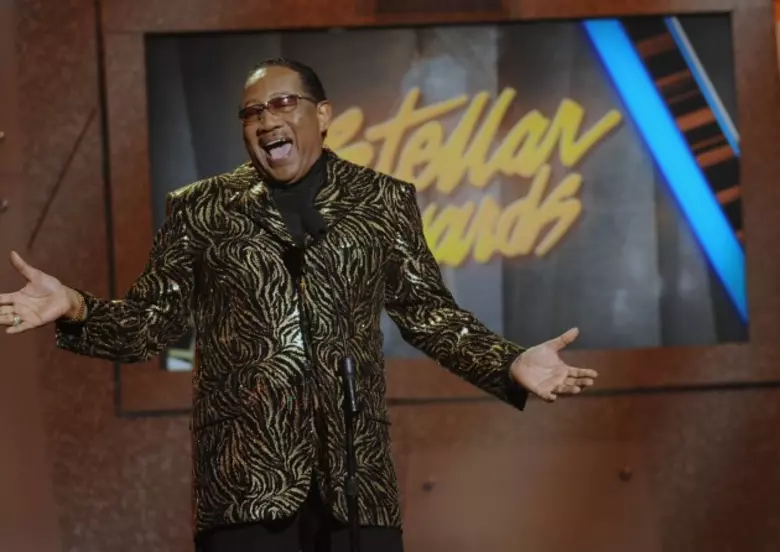
Dr. Bobby Jones Presents The Ambassador Dr. Bobby Jones Legends Award during the Stellar Awards in 2012. (Photo by Rick Diamond/Getty Images for Stellar Awards)
Dr. Bobby Jones has spent a lifetime making sure gospel music was not hidden, dismissed, or reduced. That is the reason so many others were able to step forward with greater visibility, greater reach, and greater acceptance than what existed before.
And even now, sitting in a home filled with evidence of that life, he doesn’t come across as someone “finished”. He still shows up. He still believes it matters. And—importantly—he has done more than believe. He has invested his time, his platform, and his own resources into making sure this culture continues forward in places like the National Museum of African American Music.
That’s the difference.
At some point, appreciation turns into responsibility.
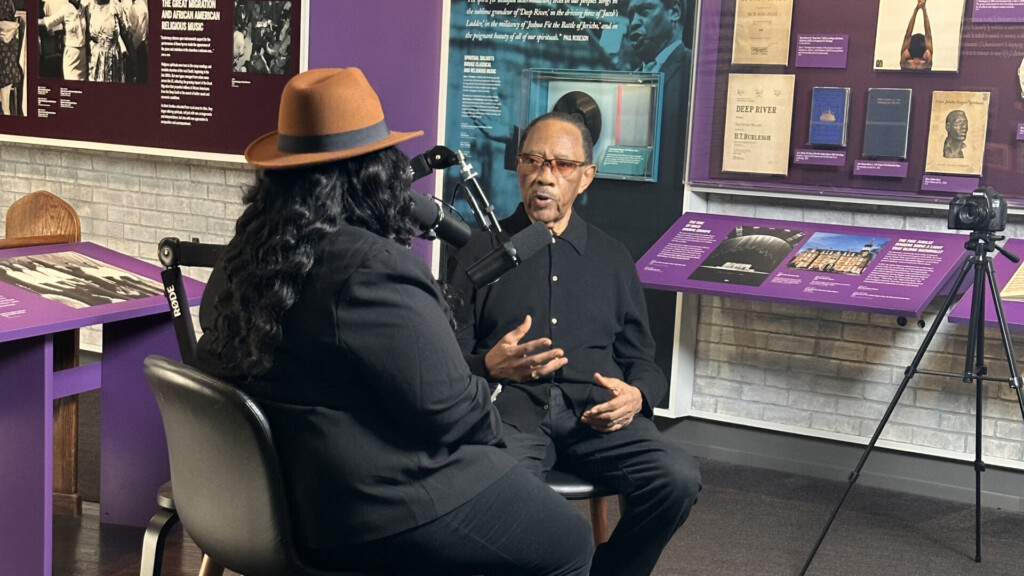
Dr Bobby Jones giving an interview in the Wade In The Water gallery at NMAAM, where he is the virtual host of the “Sing with the gospel choir” interactive video. (Photo by Grace Burgess for NMAAM, 2025)
When we part ways, it’s rarely with a final note.
Au revoir.
Not an ending.
Just the understanding that something continues.
The only question is, who continues it? I sincerely hope it’s you.
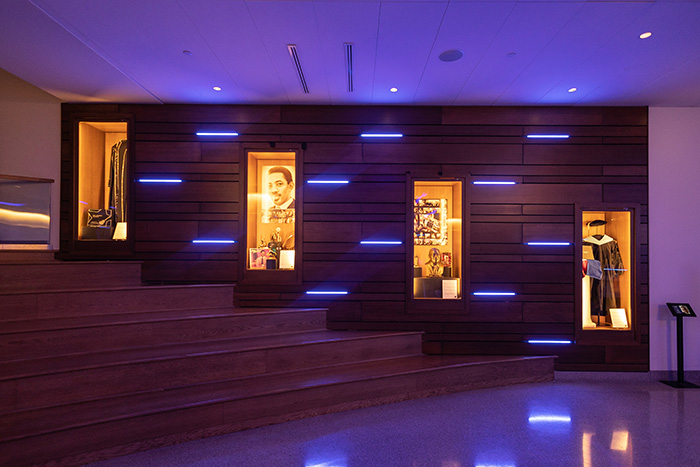
Dr Bobby Jones’ lobby case exhibit at the National Museum of African American Music in 2023 (photo by Elle Danielle, MOJO Marketing).
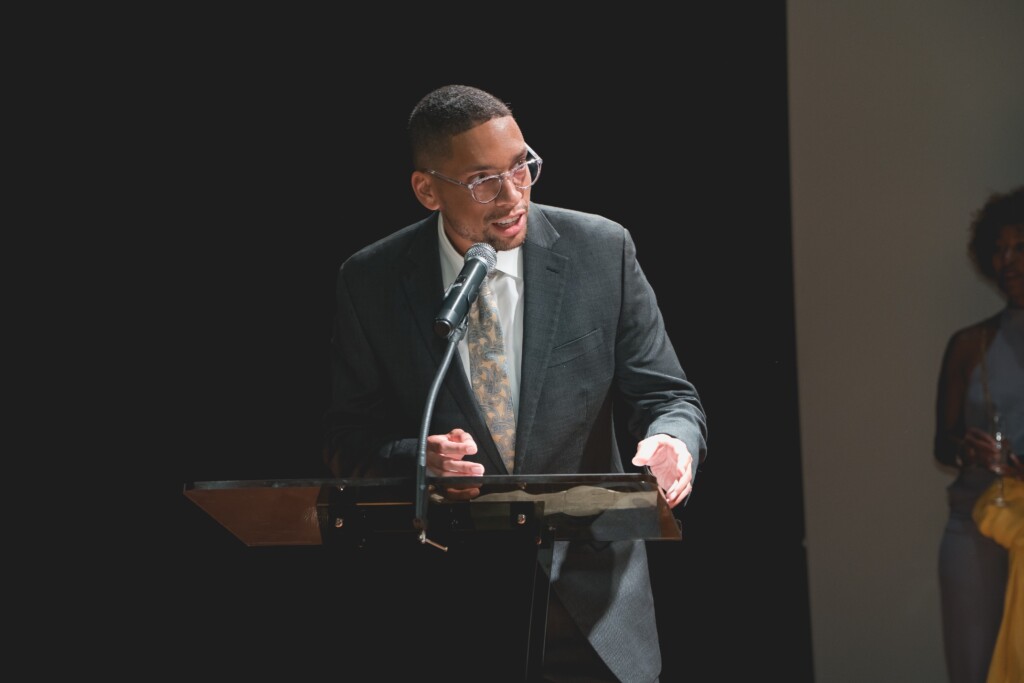
Lorenzo Windrow serves as Associate Director of Development at the National Museum of African American Music, where he manages an $8 million contributed income pipeline and leads transformative campaigns that sustain the museum’s mission of celebrating black music and culture. Read his bio here.
Mission Mondays is an initiative by The National Museum of African American Music to highlight the stories of the major donors who help make our mission possible. Want to be featured? Please contact marketing@nmaam.org. Inspired to support?