Mission Mondays: Investing in Legacy Through the Francis S. Guess Roots Theater
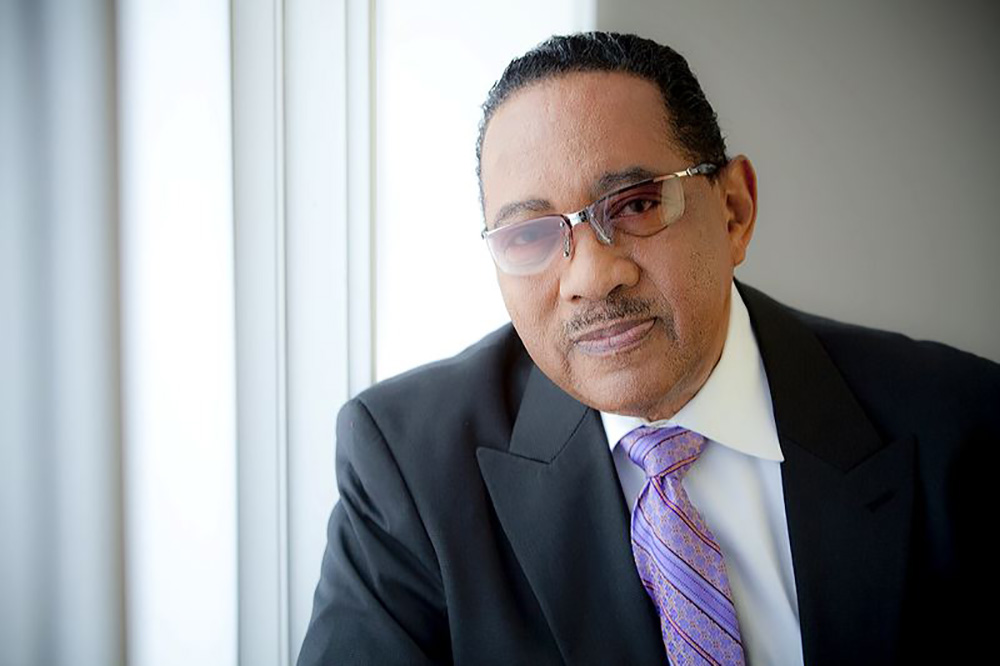
by Lorenzo Windrow, Associate Director of Development for the National Museum of African American Music
There are supporters who give because they attend.
And there are supporters who give because they understand.
Wakeela and Amiya Simmons are the latter.
Music has always been more than background noise in their lives — it has been formative. Wakeela grew up in Nashville listening to country music every morning in her grandmother’s kitchen. It was ritual. It was rhythm. It was home. Amiya’s relationship with music has always been rooted in its connective power — the way blues tells the truth of struggle, the way hip hop documents cultural evolution in real time, the way melodies move across generations without asking permission.
The two met in high school and have remained rooted in Nashville, where they are now raising their eight-year-old son. In their home, music is not simply played — it is inherited. For the Simmons family, music heals, teaches, connects, and preserves. In 2024, that lifelong love translated into stewardship. Wakeela and Amiya participated in the Francis S. Guess Roots Theater Campaign, securing a named plaque inside the NMAAM Theater — an affirmation that African American music and its influence deserve to be preserved with intention.
Francis S. Guess was a Nashville civic leader whose legacy represents service, vision, and long-term commitment to community growth. The Roots Theater honors that spirit by serving as a living stage — where gospel harmonies, blues storytelling, hip hop lyricism, and cultural dialogue continue shaping the future.
As Associate Director of Development at the National Museum of African American Music, I have the privilege of working alongside families who recognize that admiration alone does not sustain institutions — participation does. The Simmons graciously allowed us to share reflections from both of them on why they chose to invest in NMAAM and what that investment means to their family.
The following is our conversation.
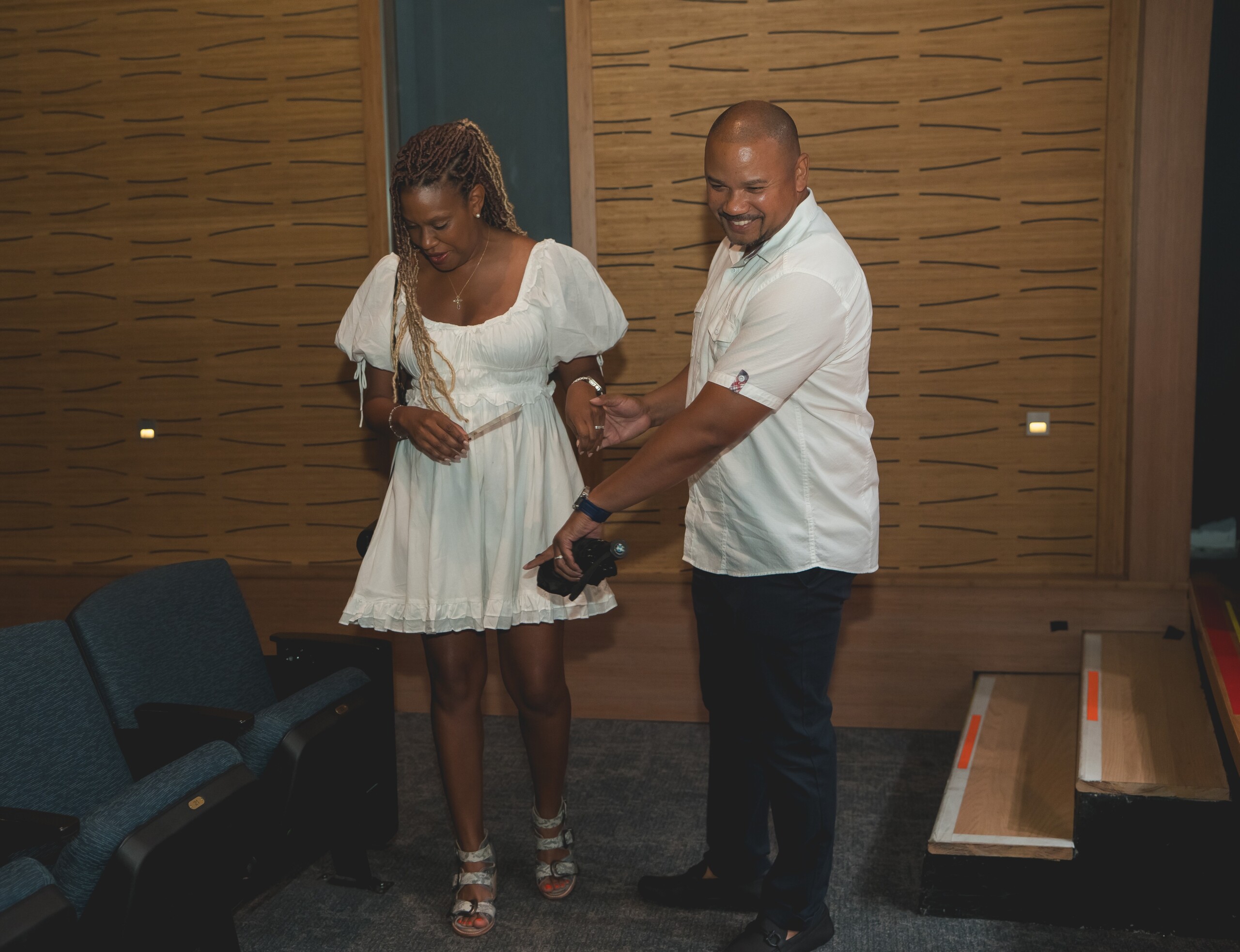
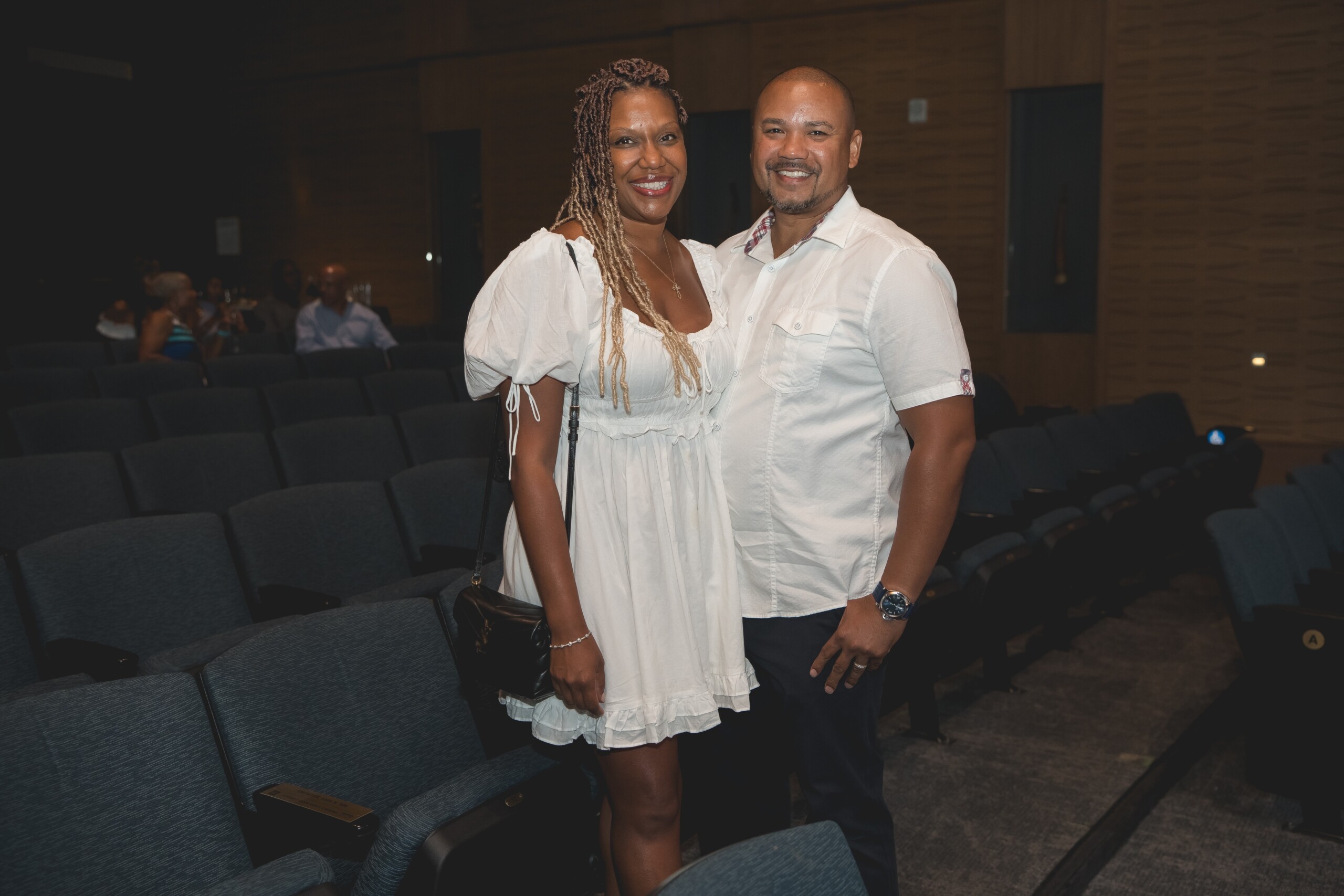
Mr. & Mrs. Simmons choose their seat during the dedication ceremony.
What first connected you to the mission of NMAAM — and when did it shift from something to visit to something to invest in?
Wakeela:
From the moment we walked in, I felt seen. Music has always been central in my life — from my grandmother’s kitchen to the soundtrack of our home today. Seeing that full lineage honored in one place made me realize this wasn’t just a museum. It was documentation of who we are.
Amiya:
The shift happened when we understood that institutions like this don’t sustain themselves through admiration alone. You can love something — but if you want it to endure, you invest in it. That realization made the difference.
Why is preserving African American music history especially important right now?
Wakeela:
Because cultural memory doesn’t preserve itself. Blues, gospel, hip hop — these genres shaped American culture in ways that still ripple globally. If we don’t preserve that intentionally, we risk detaching the influence from its origin.
Amiya:
Music has always told the truth — even when other narratives didn’t. Preserving it protects more than sound. It protects story.
You chose to participate specifically in the Francis S. Guess Roots Theater campaign. Why that initiative?
Amiya:
The Theater feels alive. It’s not static. It’s where stories continue being written.
Wakeela:
And Francis S. Guess represented civic responsibility. He believed in building things that would outlast him. Supporting the Roots Theater felt aligned with that spirit. It’s about continuity, not visibility.
When you think about your support, what impact matters most to you?
Wakeela:
Access. When a young person walks in and sees their culture centered — not peripheral — that shifts perspective.
Amiya:
Education, absolutely. Especially for our son. We want him to grow up knowing that the music he hears isn’t just entertainment — it’s history, innovation, resilience.
Has your relationship with the Museum evolved since becoming supporters?
Amiya:
Yes. There’s a deeper sense of connection.
Wakeela:
You move from attending events to feeling responsible for momentum. It becomes less “the Museum” and more “our Museum.”
For someone who loves NMAAM but hasn’t yet taken the step to support it — what would you want them to understand?
Wakeela:
If something has educated you or made you proud, it’s worth sustaining.
Amiya:
Support doesn’t have to be dramatic. It just has to be intentional.
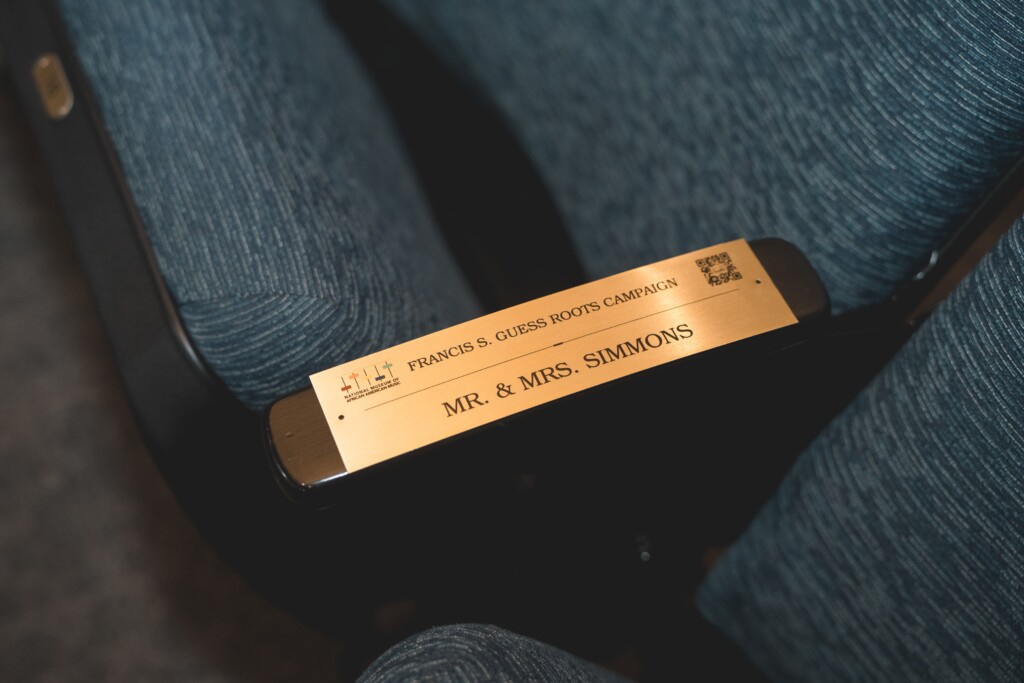
Mr. & Mrs. Simmons’ plaque gets installed at their seat.
Supporters like the Simmons Family remind us that stewardship is not transactional — it is transformative.
As Nashville continues to grow as a global cultural destination, NMAAM stands as one of the few institutions capable of telling the story of African American music on a national stage, authentically and unapologetically.
The Francis S. Guess Roots Theater is more than a space. It is a commitment — to legacy, to preservation, to the next generation watching from the audience, and the next generation to take the stage.
Mission Mondays exists to highlight those commitments.
Because legacy is never accidental.
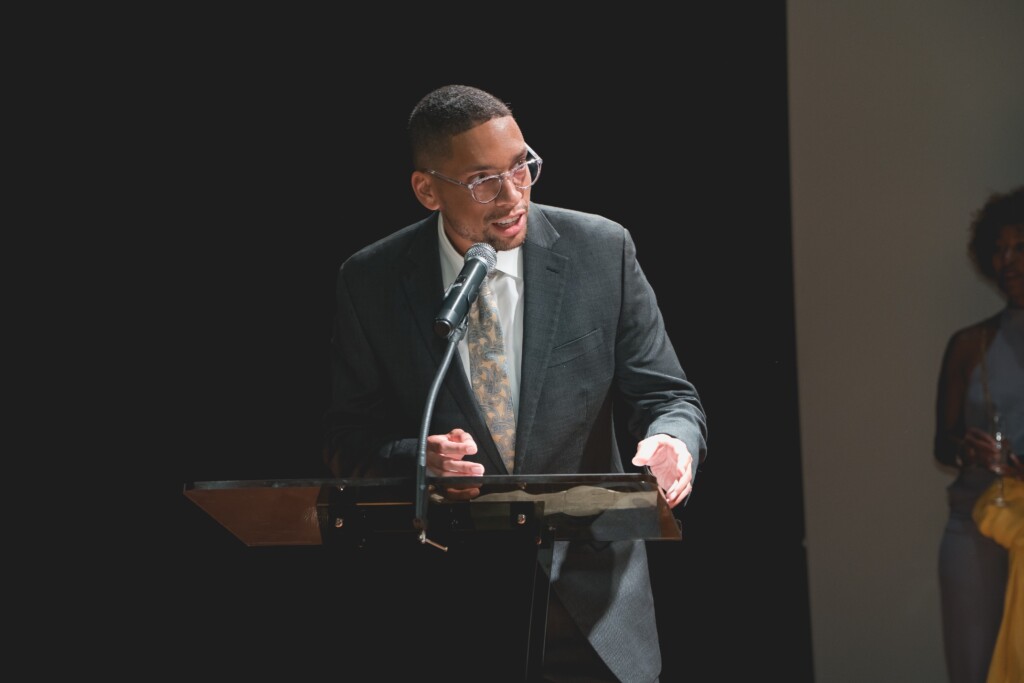
Lorenzo Windrow serves as Associate Director of Development at the National Museum of African American Music, where he manages an $8 million contributed income pipeline and leads transformative campaigns that sustain the museum’s mission of celebrating black music and culture. Read his bio here.
Mission Mondays is an initiative by The National Museum of African American Music to highlight the stories of the major donors who help make our mission possible. Want to be featured? Please contact marketing@nmaam.org. Inspired to support?